Tutorial: Feb. 28 AM-PM, 2027
2nd floor. International meeting room (Kokusai Kaigi Shitu).
70min / Lecture, incl. Q&A. The order of the presentations may change.
Tutorial 1
Prof. Nando Kaminski
University of Bremen, Germany

Nando Kaminski (Senior Member IEEE) studied electrical engineering at the University of Bremen and finished with the Dipl. Ing. degree in 1994. Afterwards until 1997, he was researcher and PhD-candidate at the former Daimler-Benz research institute in Frankfurt (Main), Germany. He worked on Silicon-Carbide power devices and received the Dr. Ing. degree from University of Bremen in 2001.
From 1998 until 2008 Nando Kaminski was with ABB Semiconductors in Lenzburg, Switzerland. He worked on IGBTs, IGCTs, diodes, packaging, and reliability. He held various positions as project, team, laboratory, and customer support manager in R&D and quality before he finally became department manager and head of the IGBT module factory.
Since 2008 he has been full professor for power semiconductor devices at University of Bremen and one of two directors of the Institute for Electrical Drives, Power Electronics, and Devices (IALB). His research interests include alternative semiconductor materials, material basics, device concepts, simulation, packaging, reliability, influence of parasitics, and EMC.
Nando Kaminski’s chair is Centre of Competence of the ECPE (European Center for Power Electronics e.V., Nuremberg, Germany), whilst he is technical program chairman of the CIPS, member of the advisory board of the PCIM and of the international program committee of the ISPS. From 2012 to 2017 he served a regular term as member of the technical program committee of the ISPSD and was short course chairman of the ISPSD’16 in Prague, technical program committee chairman of the ISPSD’20, Vienna (virtual), and general chairman of the ISPSD’24 in Bremen.
Tutorial 2
Advanced Capacitor Technology for Power Electronics
Prof. Thomas Ebel
University of Southern Denmark, Denmark

Thomas Ebel (Senior Member, IEEE) received the Dipl.-Chem. degree (M.Sc. equivalent) in chemistry from Münster University, Münster, Germany, in 1992, and the Ph.D. degree (Dr. rer. nat.), from the Institute of Inorganic Chemistry, Münster University, in 1995.,In 1995, he spent three months as a Guest Researcher with the CNRS, Institute des Matériaux de Nantes, Nantes, France, with Prof. J. Rouxel. From 1995 to 2001, he was a Research and Development Engineer and later the Research and Development Director with Siemens Matsushita Components, Siemens AG PR, since 1999 EPCOS AG, since 2008 TDK, in the Business unit of Aluminium-Electrolytic-Capacitors, Heidenheim, Germany. From 2001 to 2008, he was the Research and Development Director, later the Technical Director (CTO), a member of the Board of Directors at Becromal Norway (Becromal S.p.A, since October 2008 Epcos, now TDK foil), Milano, Italy. From 2008 to 2018, he was the Managing Director and Shareholder with FTCAP GmbH, Husum Manufacturer of Aluminium Electrolytic and Film-Capacitors, Heidenheim, in 2018. He has been appointed as an Associate Professor and the Head of the Centre for Industrial Electronics, University of Southern Denmark, Sønderborg, Denmark, since 2022 as a Full Professor.,Dr. Ebel was acknowledged with the TEK Innovation Award of SDU in 2023.
Abstract
Capacitors are one of the fundamental components especially used in power electronics. Recent research activities are actually very much focused on active components like wide band gap semiconductor power electronic devices. However, this progress leading to an increasing power density, higher operational voltage levels, compactness thru integration of components and especially the physical properties of the new high performant semiconductor power devices based on mainly SiC, GaN or further new upcoming materials, are requiring new capacitors technologies and designs. Especially the need for a further reduction of parasitic losses at high switching frequencies and high temperature and highest voltage exposure request a redesign of materials, inner constructions, and termination.
This IWIPP27 capacitor tutorial will put a focus on such new design and research in the field of advanced capacitor technologies. It will introduce different capacitor technologies like Aluminium Electrolytic Capacitors based on classical wet, conducting polymer or hybrid electrolyte systems; Progress in metallized film capacitors (inc. Power Capacitors), ceramic capacitors and Supercapacitors with a focus on:
•Fundamental physics of capacitors
•Electrical properties of different capacitor technologies
•Traditional and new materials related to all above mentioned capacitor technologies
•Reliability, lifetime models, robustness testing of the different capacitor technologies
•Condition monitoring using AI/ML methodology of the different capacitor technologies
•Presentation of selected applications of capacitors in classical power electronic converters, like DC-link, filter, and pulse power
Tutorial 3
From Switching Edges to System Health: Gate Drivers for Data-Center Power
Prof. Weijia Zhang
Hong Kong University of Science and Technology, Hong Kong

Weijia Zhang received her BASc, MASc and PhD degrees in Electrical Engineering from the University of British Columbia and University of Toronto, in 2012, 2015, and 2019, respectively. In 2021, Dr Zhang joined the controller IC design group of Analog Device Inc, Colorado Springs, to work on power IC design for automatic testing equipment (ATE) applications as a senior IC design engineer. Her academic career started in 2025 with the Department of Electrical Engineering at HKUST. Her research interests cover a wide spectrum, ranging from smart power ICs, power management ICs, integrated DC-DC converters, smart gate driver ICs, AI-assisted power applications, packaging and thermal management, and advanced power controllers. Dr Zhang serves as the technical committee member in ICD track for the IEEE ISPSD (since 2026).
Abstract
As data-center power converters pursue higher efficiency and power density, gate-driver design becomes central to managing switching behavior, electrical stress, and reliable operation. This tutorial presents gate drivers as local interfaces for controlling switching transitions, coordinating multiple power devices, and observing degradation, connecting circuit-level mechanisms with the demands of data-center power conversion.
Beginning with a representative “high-voltage” power stage, the tutorial explains how negative turn-off bias, gate-loop parasitics, and packaging jointly influence off-state robustness. It then examines techniques for decoupling current and voltage slew-rate control, highlighting their benefits and practical limits. The discussion extends to half-bridge level shifters in hybrid multilevel converters, where moving voltage references create challenges for common-mode transient immunity and timing integrity.
For “high-current” systems, the tutorial distinguishes current sharing from thermal balancing and explores how gate driving, converter control, and packaging can work together to mitigate hotspots. It subsequently examines aging detection and lifetime prediction, emphasizing the distinction between measuring parameter drift, identifying degradation, and estimating remaining useful life. A brief outlook introduces radiation-tolerant gate driving as an extension to demanding environments beyond conventional data centers.
Through intuitive circuit models, switching waveforms, and practical examples, participants will learn to assess what gate drivers can control and observe—and how these capabilities can support efficient, thermally balanced, and reliable power conversion.
Tutorial 4
Recent Trends in Power Modules and Technologies for Achieving Higher Performance and Higher Power Density
Prof. Yoshikazu Takahashi
Tohoku University, Japan
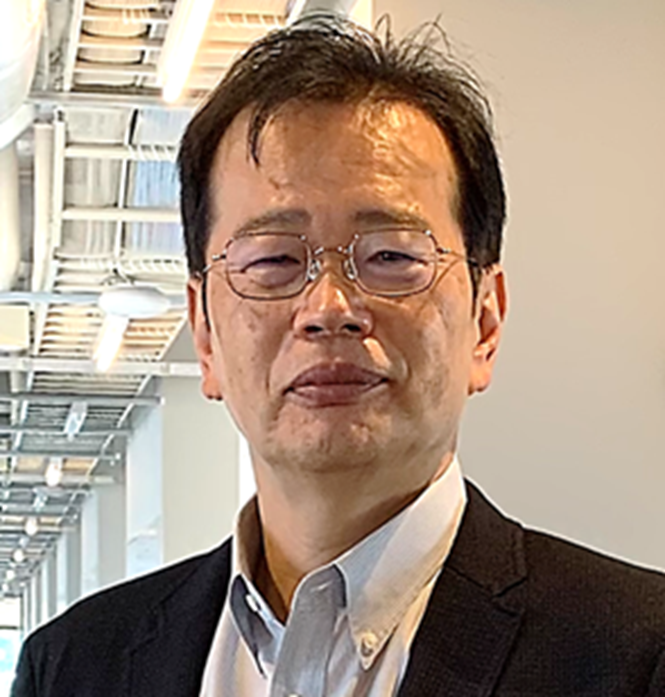
Professor Yoshikazu Takahashi graduated from Waseda University in 1982 and joined Fuji Electric Co., Ltd. He received his Ph.D. from Yamanashi University in 1998. At Fuji Electric, He was primarily responsible for the development of high-capacity semiconductor technology and power module technology. Subsequently, He served as the director of the power module development center and as chief engineer.
From 2017 to the present, he has served as Professor and Director of the Research and Development Division at the Center for Innovative Integrated Electronic Systems, Tohoku University. From 2018 to 2023, he served as Deputy Program Director for the Cabinet Office’s Second-Phase SIP “Energy Systems for an IoE Society”. From 2021 to 2025, he served as Principal Investigator for the Ministry of Education, Culture, Sports, Science and Technology’s “INNOPEL, Power Electronics Circuit Systems area”. Recipient of the 47th The 47th Encouragement Award for Electrical Science and Technology, the 17th STS Award, and the NE Power Electronics Award 2024 Grand Prize.
Abstract
Recent research and development on power devices such as SiC and GaN has made remarkable progress, and their contribution to advancements in various fields of power electronics—including EV inverters, DC-DC converters, power supplies for AI data centers, and power supplies for renewable energy—is clear event. Furthermore, packaging technologies for these power devices are also advancing by leaps and bounds. In particular, the importance of power modules which serve as the interface between power devices and power electronics circuits—is steadily increasing, and the underlying technologies are becoming increasingly sophisticated.
In this tutorial, I will first explain the latest trends in power modules, followed by a presentation of three cutting-edge power module examples developed by our team. The first is a single-sided cooling power module that incorporates a copper bump bonding structure—which utilizes direct metal bonding (interatomic bonding) technology and an aluminum wire-free structure—to achieve low thermal resistance and low inductance. The second is a double-sided cooling power module and its gate drive technology, designed with a primary focus on ease of manufacturing, ease of parallel connection, a slim profile, and low-noise performance. The third is a power module that employs a two-layer water-cooling structure (3D structure) to achieve low inductance, high heat dissipation, and miniaturization. Through these cutting-edge power module technologies, I will explain in detail how we have improved power density and functionality.
Tutorial 5
Dr. Lars Boettcher
Fraunhofer IZM, Germany
(IWIPP Welcome reception will be held in the evening of Feb.28 at Event Hall.)